Fairy-tale narrative motif
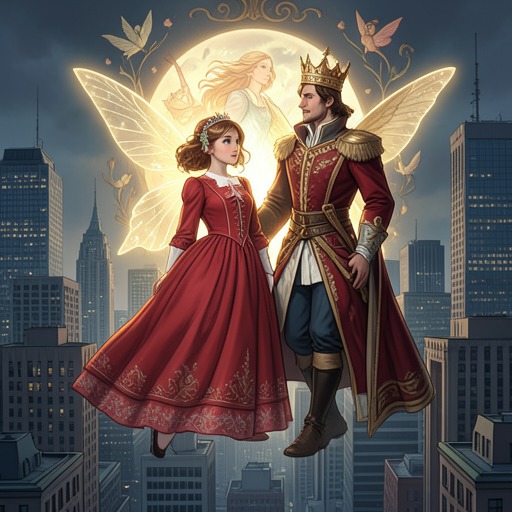
Cinder & EllaThe fairy-tale narrative motif is both a structure Ella uses to understand her life and a story pattern she resists. Fairy tales promise that hardship will make a heroine deeper and stronger, but Ella recognizes the cost of that promise: the lesson may belong to a story, while the suffering belongs to the person who must endure it. Her reflections on tragedy, her mother’s naming choice, and the fantasy books she shares with Cinder make the motif a framework for identity and connection, not simply a guarantee of a happy ending.
The cost of becoming a heroine
Ella opens by examining the familiar fairy-tale demand that a heroine suffer before she can become admirable. A protagonist who has been pampered, she observes, may seem too easy to dismiss; obstacles are supposed to lend a character depth, vulnerability, and qualities readers can recognize in themselves. In the logic of the tale, deprivation becomes an education, and pain is made to serve growth.
Yet Ella refuses to treat that logic as comforting. She understands why stories use it, but insists that, for the heroine experiencing it, the arrangement is still terrible. That distinction gives the motif its critical edge: narrative purpose does not make real suffering desirable. The book places the familiar promise of character-building tragedy beside the cost it conceals, letting Ella recognize the pattern without pretending its meaning makes the pain worthwhile.
From an ordinary life to sudden tragedy
Before her mother’s death, Ella describes her life as neither especially fairy-tale-like nor marked by genuine tragedy. Her father’s affair and departure had left her growing up without him, but her mother was her best friend, and that relationship made life feel good enough. The absence of a father is part of her history, yet it has not, in Ella’s account, turned her life into the ordeal her opening reflection describes.
That balance changes when her mother plans a birthday ski weekend in Vermont. As they leave Boston for four days away, her mother describes the treats she has booked: a hot tub to warm up in and massages after long days on the slopes. Ella is grateful but asks whether they can afford such a lavish trip. The exchange presents their closeness through ordinary affection and practical concern just before the trip becomes the tragedy that reorganizes Ella’s life. The sudden shift makes the fairy-tale pattern concrete: the rupture is not a chosen lesson, but an event whose consequences fall on the daughter who survives.
A name inherited from fantasy
The name Ellamara connects Ella’s personal identity to a fictional heroine long before the accident. Her mother loved the fantasy series The Ash Chronicles as a child and named her daughter after Ellamara, its mysterious druid priestess. Ella takes pride both in the name and in the preference behind it: her mother chose the less obvious favorite rather than Ratana, the warrior princess whom other readers tended to favor. Ella regards Ellamara as the better character, making the name a small inheritance of taste and shared imagination.
That imaginative inheritance also shapes Ella’s public voice. At fifteen, she began Ellamara’s Words of Wisdom, a blog reviewing books and films; by the point described, its third anniversary is approaching. Her chosen name is not an invented disguise but a deliberate tribute to the character and the series that her mother loved. The books therefore bind together Ella’s mother’s childhood, Ella’s own reading life, and the online identity through which she meets her closest friend.
The story that brings Ella and Cinder together
The Ash Chronicles are not a private family reference alone. The series, which began in the 1970s, has become one of contemporary literature’s most popular stories, and its first book, The Druid Prince, is soon to be adapted for film. That wider reach forms a contrast with the intimate origin of Ella’s name: a mother’s childhood favorite has become a cultural phenomenon, while its meaning for Ella remains personal.
Cinder first finds Ella through her blog post arguing that Ellamara is the most underrated character in the books. He shares her enthusiasm for the series, though his first message challenges her preference, claiming that Ratana is a better match for Prince Cinder. Their bond develops through ongoing email exchanges and repeated disagreements about Ella’s reviews; the fictional romance and character pairings supply them with a continuing language for teasing and debate. They have not met or spoken by telephone, but Ella calls Cinder, alongside her mother, her best friend.
Tragedy, return, and the limits of the fairy-tale promise
After Ella has been absent, the motif resurfaces in the language through which the friends reconnect. Cinder tells her that he missed her, asks her not to disappear again, and addresses her as a wise and beautiful mystical priestess of the realms; he says that he needs her advice and guidance. Ella answers that he never listens to her, and Cinder replies that he always listens but rarely agrees. Their exchange returns to the identity born of her mother’s books, but now that shared fiction carries the weight of a real separation and reunion.
The priestess title turns a literary preference into an affectionate form of recognition: Cinder speaks to Ella through the character and name that first led him to her, while acknowledging how much her presence matters to him. At the same time, their teasing refusal to agree resists a neat fairy-tale resolution. The motif can offer language for loss, friendship, and endurance, but it cannot make tragedy fair or guarantee that hardship will be rewarded. Its significance lies in the contrast between the story’s promise that suffering makes a heroine stronger and Ella’s insistence that the person undergoing it still has to live through the pain.